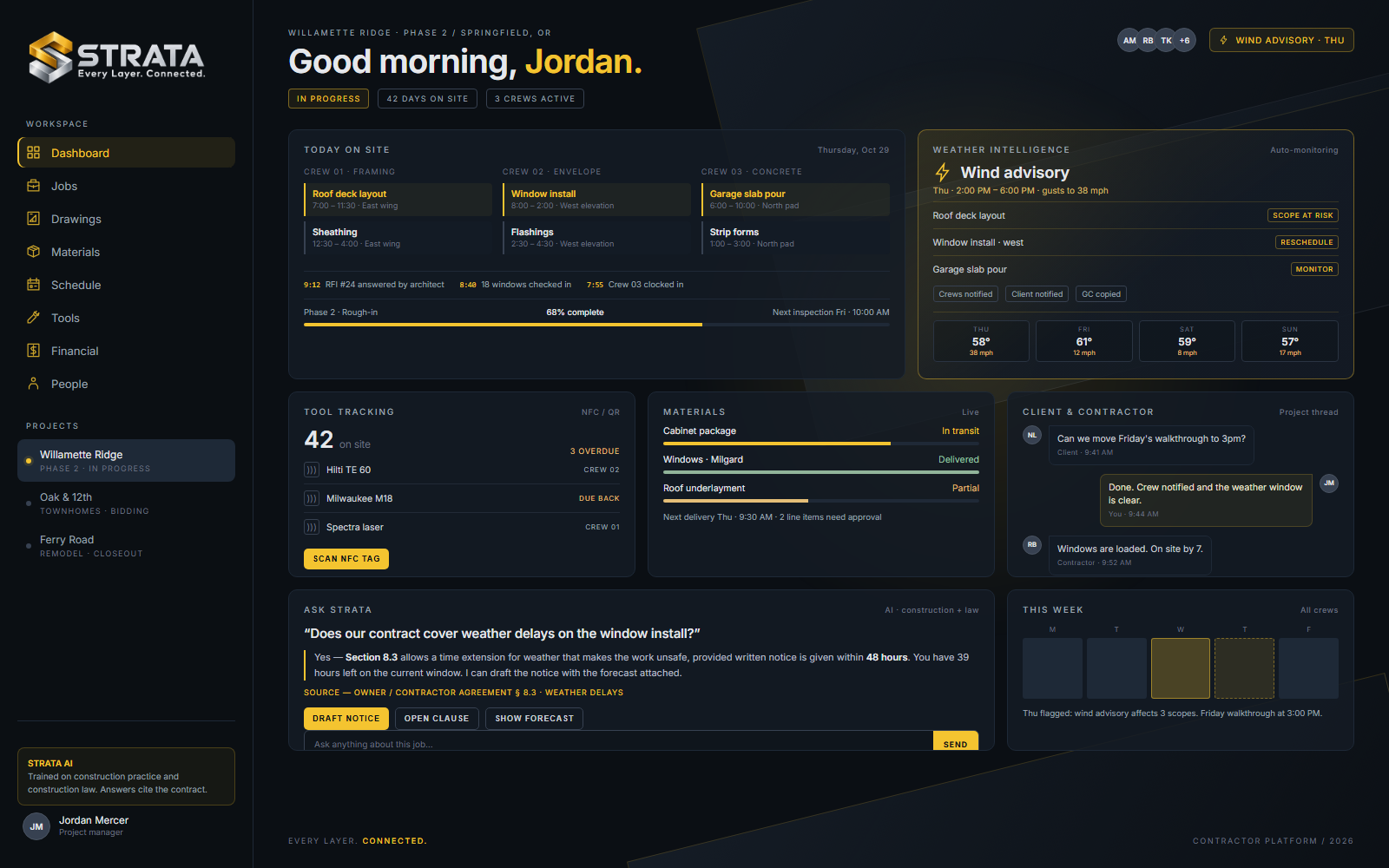
SoftwareConstruction
01View case study
Strata
Strata / 2026
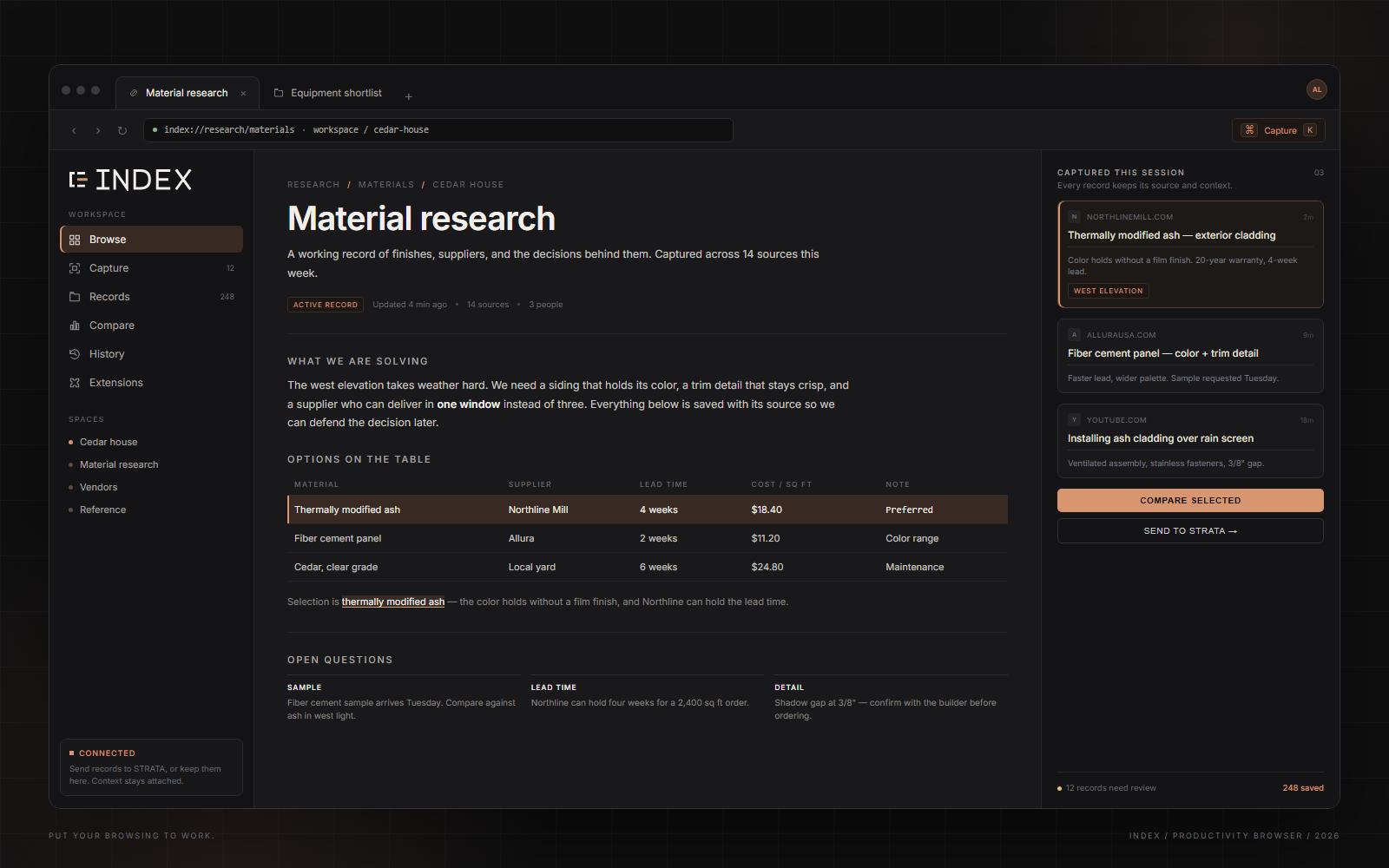
One connected platform for construction: clients, contractors, crews, money, materials, tools, and weather in the same place.
Off the Rails is a small studio that designs and builds websites, custom software, and apps for people who think differently. One idea in. A thousand possibilities out.
A thousand
possibilities.
Most studios pick a lane. We build whatever the idea actually needs — a storefront, a field app, a gnarly integration, or the tiny tool that saves someone six hours a week.
If it doesn’t live on a screen, ask anyway.
Sites that carry their weight.
Marketing sites, storefronts, editorial systems, and CMS builds your team can actually use. Fast by default, designed to be remembered.
The spreadsheet has to go.
Internal tools, dashboards, portals, and workflow software. We sit with the people doing the work, then replace the thing that is slowing them down.
From sketch to shipped.
Mobile and web products, from first prototype to app-store release. One team across design, build, and the awkward middle.
Make the robots do it.
Integrations, sync engines, scripts, and the small bits of glue that buy your team their Mondays back. AI only where it actually helps.
Good work does not need a fog machine. You will know what we are doing, what it costs, and what happens next — usually before you have to ask.
We ask the uncomfortable questions first. What is actually broken? Who is it for? What would make this a waste of money?
Wireframes, prototypes, and a visual direction you can react to. We design the hard screen before we write the hard code.
Small releases, real feedback, no black box. You see the thing running every week, and we keep the tape moving.
Docs, training, and a codebase your next developer will not curse. We stay around for the messy first month.
We are a small, senior team by choice. The person you talk to is the person doing the work. No account layer, no handoff to a junior, no deck where a prototype should be.
Some projects are a website. Some are a spreadsheet that finally snapped. We like both. What we care about is the moment something stops being a hassle and starts being useful.
The first version of the assignment is rarely the real problem. We would rather find that out in week one than month three.
A working slice beats a beautiful mockup. Ship the risky part early, learn, then make it beautiful.
Clean handoff, honest documentation, no mystery dependencies. You should be able to leave us without breaking anything.
Tell us the thing you cannot stop thinking about. We will tell you honestly whether we are the right people to build it.